Case study
Arche
Connecting patients with psychologists nationwide, removing geographic and financial barriers to mental healthcare.
Year:
2020
Industry:
Healthcare
Client:
Arche
Project duration:
6 months
Overview
In 2020, 86% of Brazilians faced pandemic-intensified mental health challenges. Patients juggled WhatsApp, Zoom, and bank transfers to schedule a single appointment.
My role
End-to-end design leadership: research through live-user validation.
The challenge
Build an ecosystem where patients find qualified professionals and receive secure remote care while psychologists reduce administrative overhead.
Context
The landscape
Brazil's mental healthcare infrastructure couldn't keep pace with demand. Professional concentration in major cities left entire regions underserved. Mental health stigma drove many to avoid in-person visits.
Existing solutions were patchwork: video calls on consumer apps lacking healthcare privacy, scheduling via phone and spreadsheets, manual payment coordination.
The opportunity
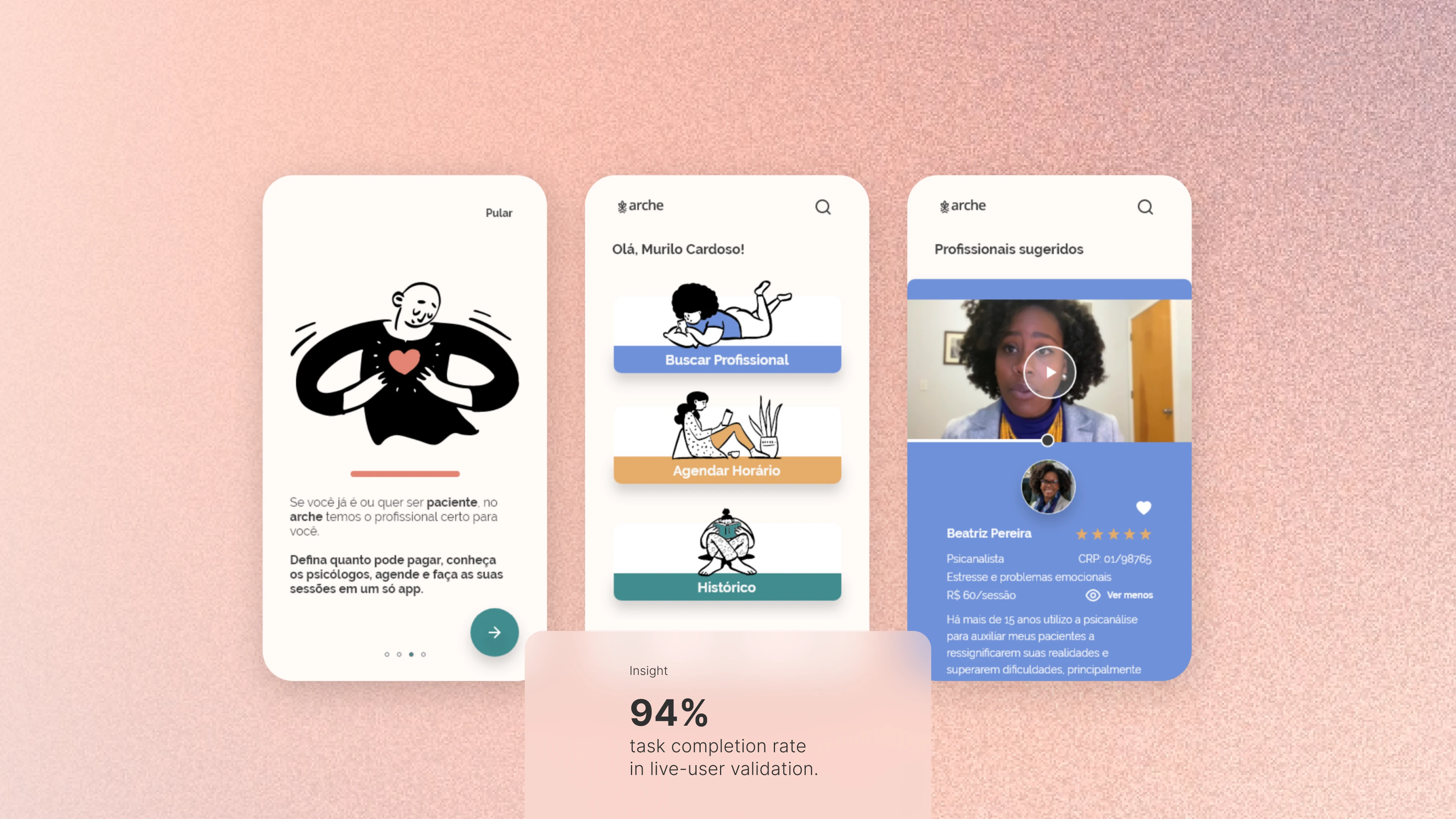
Create a unified platform handling the entire therapeutic journey: finding professionals, conducting secure sessions.

The problem
Spoke with 27 people across two groups. Patients seeking therapy and practicing psychologists.
What patients told me:
Bouncing between 3-4 apps to complete one session felt chaotic
No pricing transparency until they asked directly
Privacy concerns prevented them from trying online therapy
Finding qualified professionals felt like guesswork
What psychologists shared:
8+ weekly hours on admin work (scheduling, invoicing, follow-ups)
Personal devices and consumer apps raised professional liability concerns
Lost income from no-shows and payment delays
Sought expanded reach without infrastructure
Both sides wanted the same thing: focus on therapeutic relationships, not logistics.
Exploring solutions
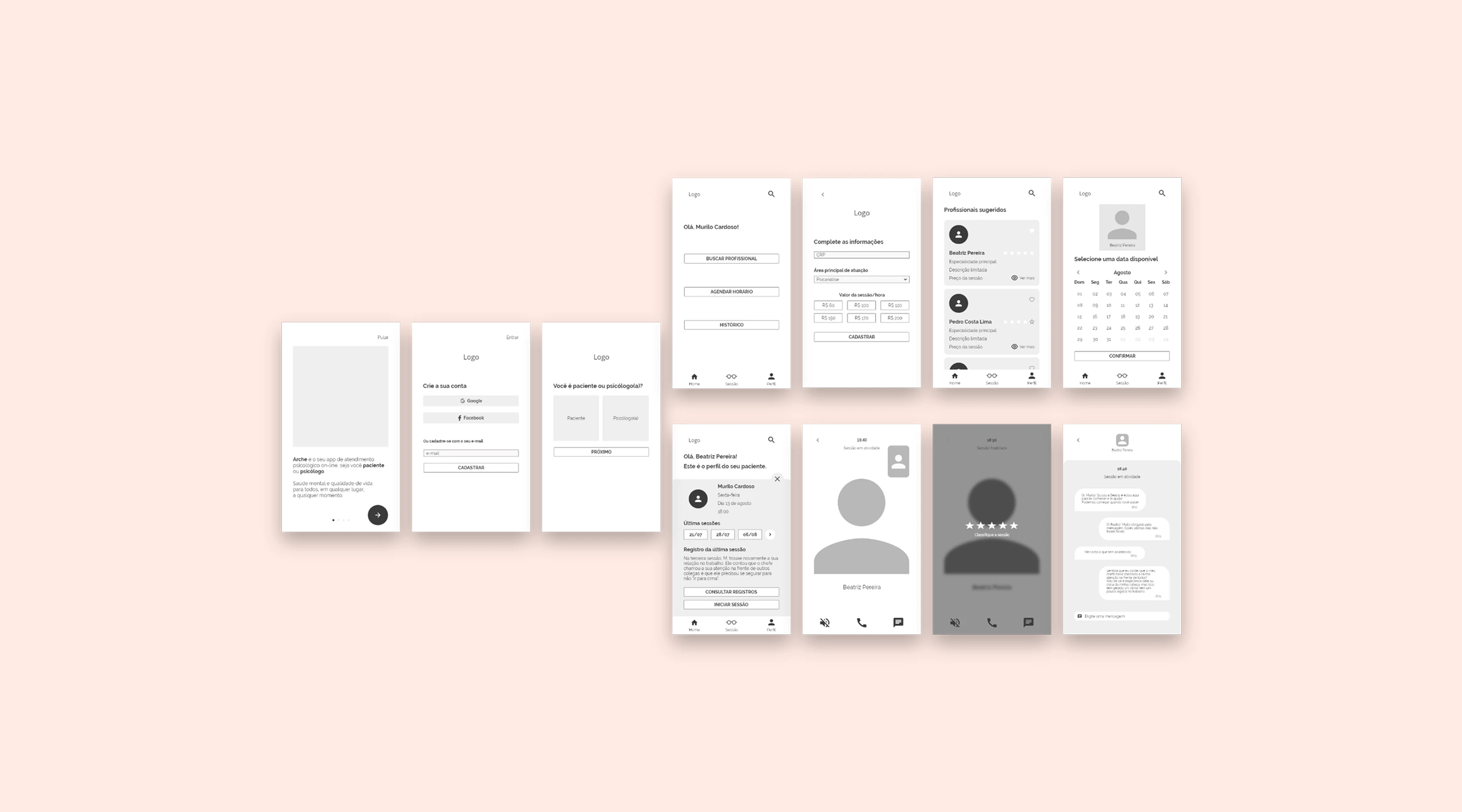
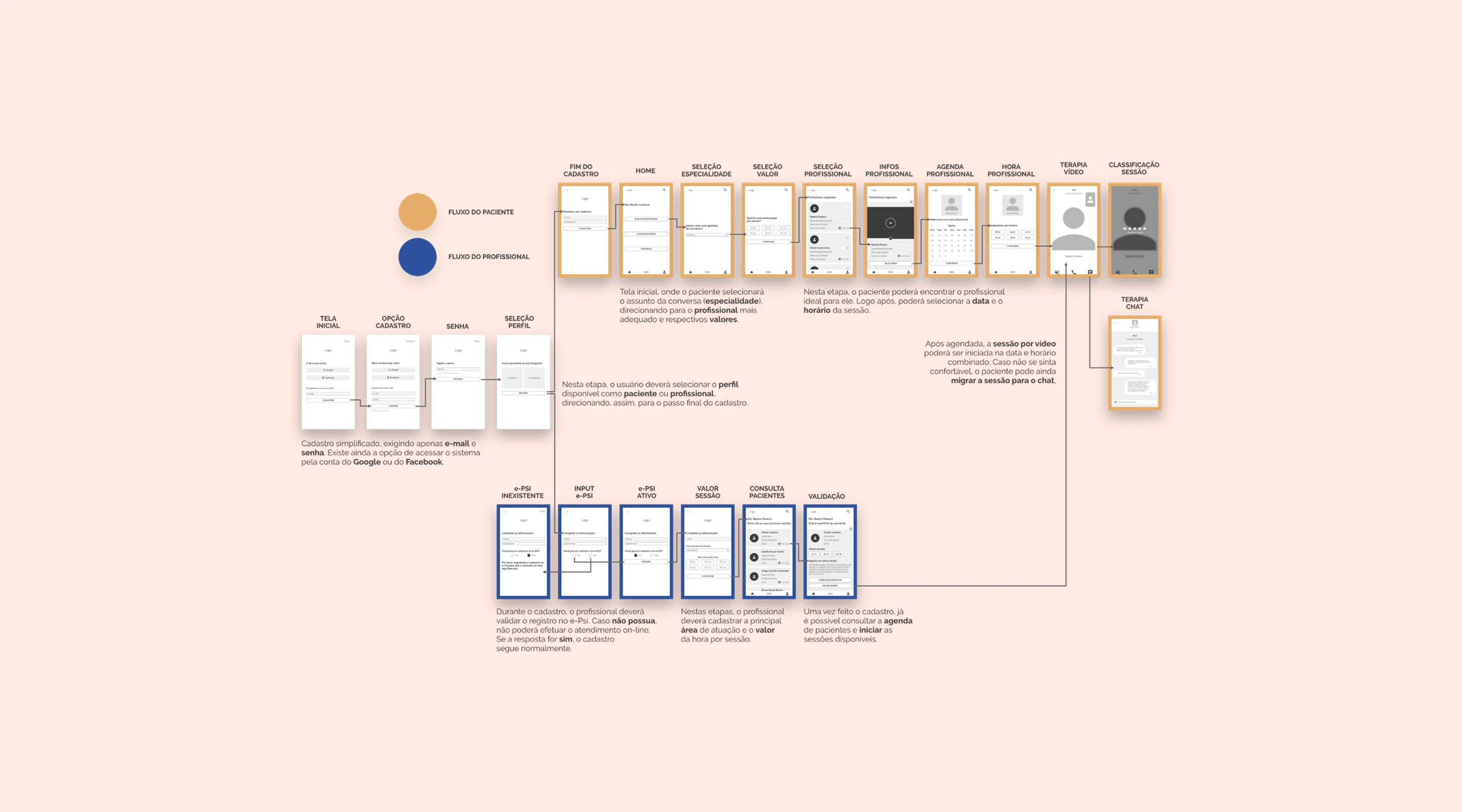
Mapped out the complete journey for both user groups. Where were the friction points? What needed to happen sequentially vs. simultaneously?
Core decisions
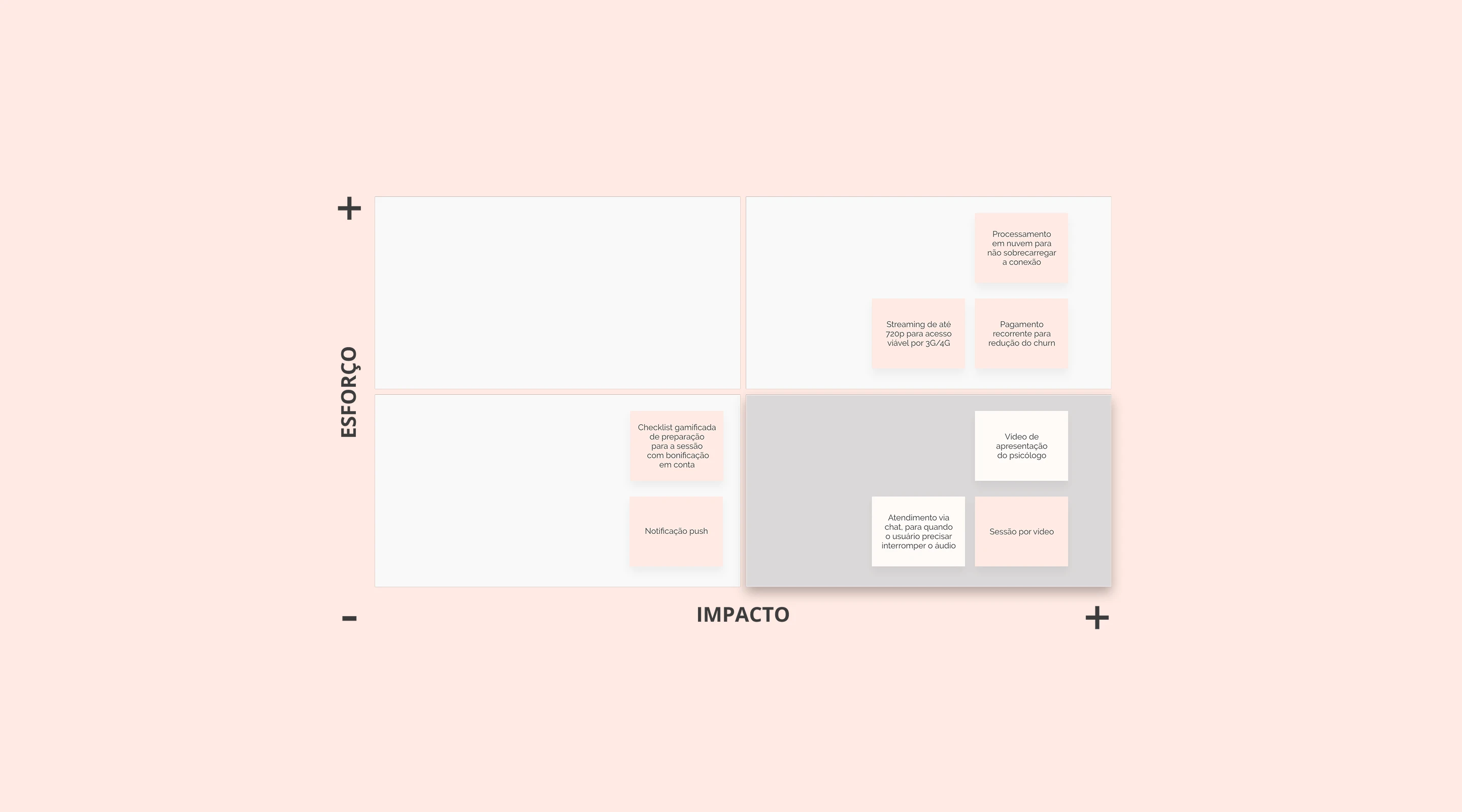
Match quality over quantity: rather than maximizing connections, helped patients find professionals who fit their needs through specialist filters, availability calendars, and transparent pricing.
Build trust systematically. In mental healthcare, trust is earned, not assumed. Made credentials visible, communicated encryption clearly (not just implemented it), and let patients review session history.
Remove admin friction. Integrated scheduling, billing, and session recording so psychologists spend time with patients, not paperwork.
Design principles
Gradual progression. Never request everything at once.
Complete transparency. Pricing, credentials, processes always visible.
Perceptible security. Privacy and encryption clearly communicated, not just implemented.
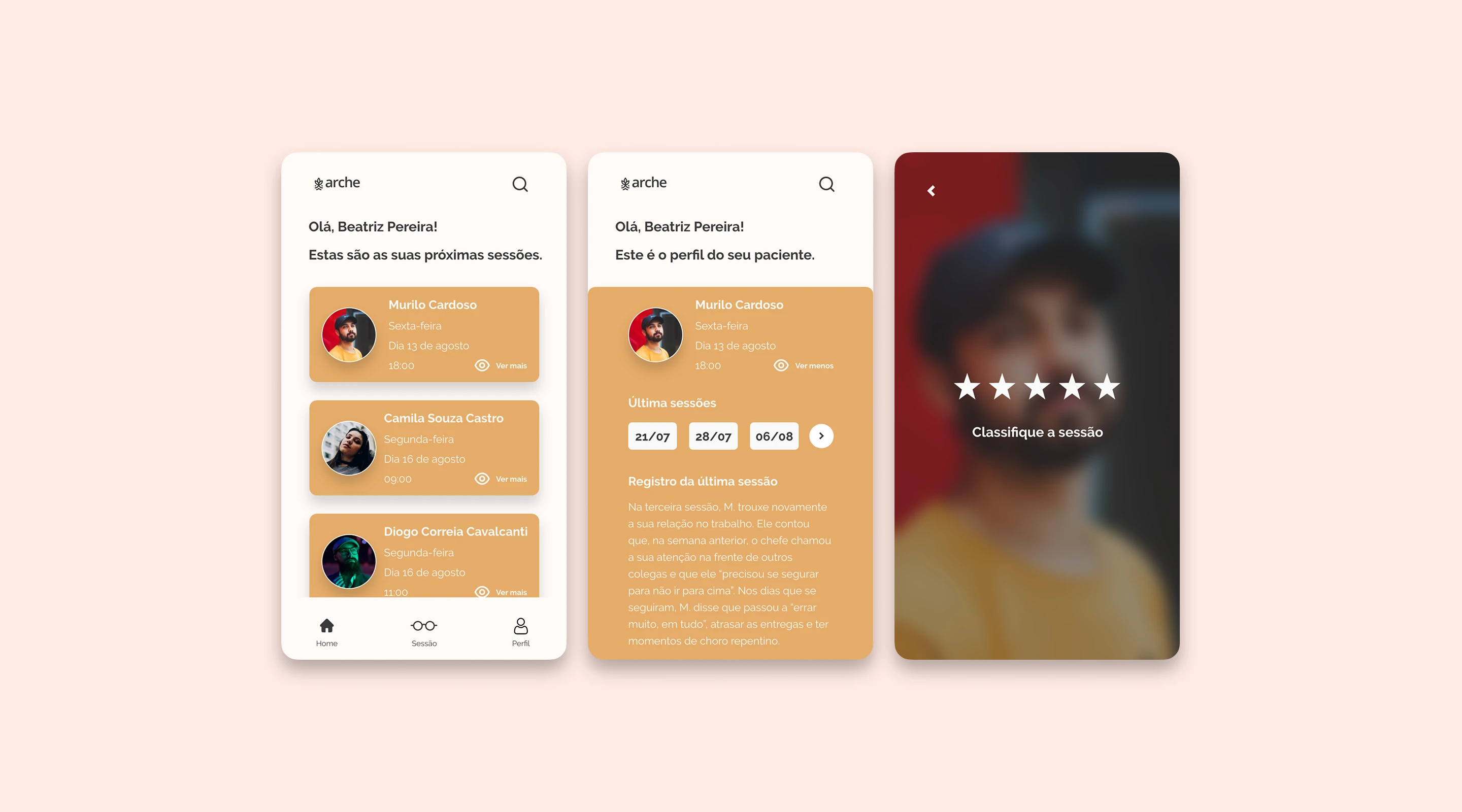
Validation
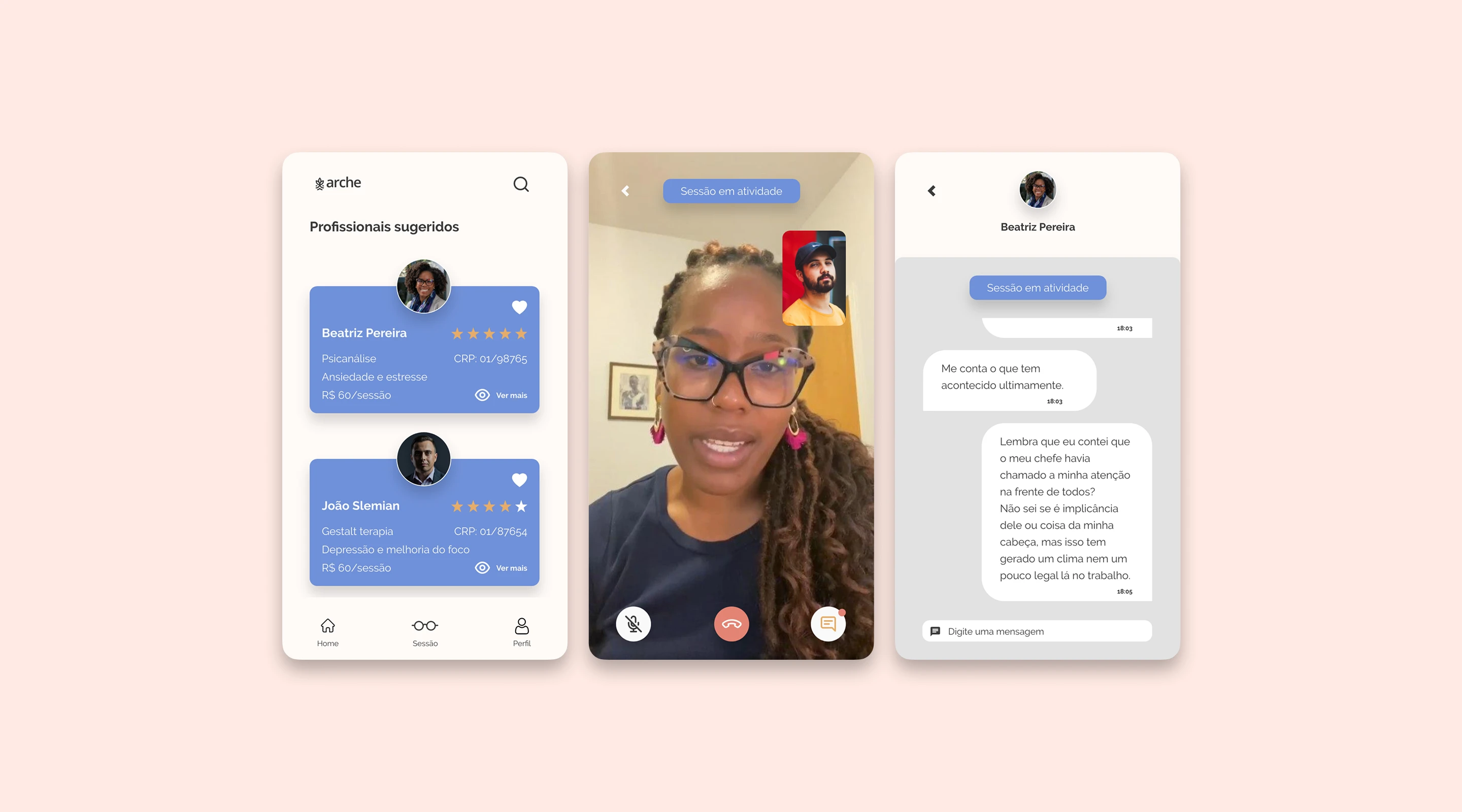
Tested an interactive prototype with 15 users (patients + psychologists) across 3 iteration rounds.
Critical adjustments based on testing:
Made profile photos optional after privacy pushback
Split psychologist onboarding into smaller steps for partial platform use
Added pre-call camera/audio test after users reported anxiety
Final metrics
94% completion rate on critical tasks
NPS 8.2 (strong recommendation intent)
Outcomes
Projected and validated impact
40-50% ↑ therapy access through geographic barrier removal
30-40% ↓ cost vs. in-person care
30-40% geographic reach expansion to underserved regions
Qualitative impact
Psychologists recovered up to 8h/week from administrative tasks. Patients reported greater control over their therapeutic journey through transparent costs and processes.
Learnings
Less is more. Avoided feature creep (journaling, community forums, educational content). Users preferred fewer features executed perfectly.
Two-sided marketplace dynamics. Initially focused 60% on patients. Learned that without easing psychologists' burden, quality supply wouldn't exist.
Trust lives in micro-interactions. Visible certifications, privacy explanations, and authentic reviews built more trust than institutional claims.
NEXT STEPS
Themed support groups: recurring user demand exploring collective care models.
B2B partnerships: companies offering "arche" as corporate benefit, scaling impact.
Intelligent matching: data-driven professional suggestions to increase therapeutic alignment and reduce dropout.
COMPLETE STUDY
View the full case study in Portuguese with detailed research findings:
Saúde mental com ARCHE — case UX | UX Collective 🇧🇷 (uxdesign.cc)